
Key Takeaways
- Reinsurance management software automates treaty administration, cession calculation, bordereaux generation, and recovery tracking — functions that legacy systems handle manually or not at all.
- The critical question for insurers is not whether to use reinsurance software, but whether reinsurance capability should be native to the core platform or managed in a separate specialist system.
- Most insurers globally do not need a standalone reinsurance system — they need a core platform with reinsurance built in.
- CLAPi©'s Reinsurance module is a native core module — not a bolt-on — integrated directly with Policy Administration, Policy Accounting, and Claims Management.
Every insurer that cedes risk to a reinsurer has a reinsurance administration problem. The question is how badly it manifests.
For insurers running legacy core systems, the problem is usually severe: reinsurance calculations done in spreadsheets, bordereaux produced by manually reconciling exports from three different systems, recovery tracking maintained in a separate register that nobody trusts completely. The reinsurance team spends the majority of its time on data reconciliation rather than reinsurance management.
For insurers evaluating a new core platform, the question becomes: does this platform handle reinsurance natively, or will reinsurance remain a manual process bolted onto the edge of the system?
This article explains what reinsurance management software actually does, what insurers should expect from a core platform's native reinsurance capability, and how to assess whether your platform — current or prospective — meets that standard.
What Reinsurance Management Software Does
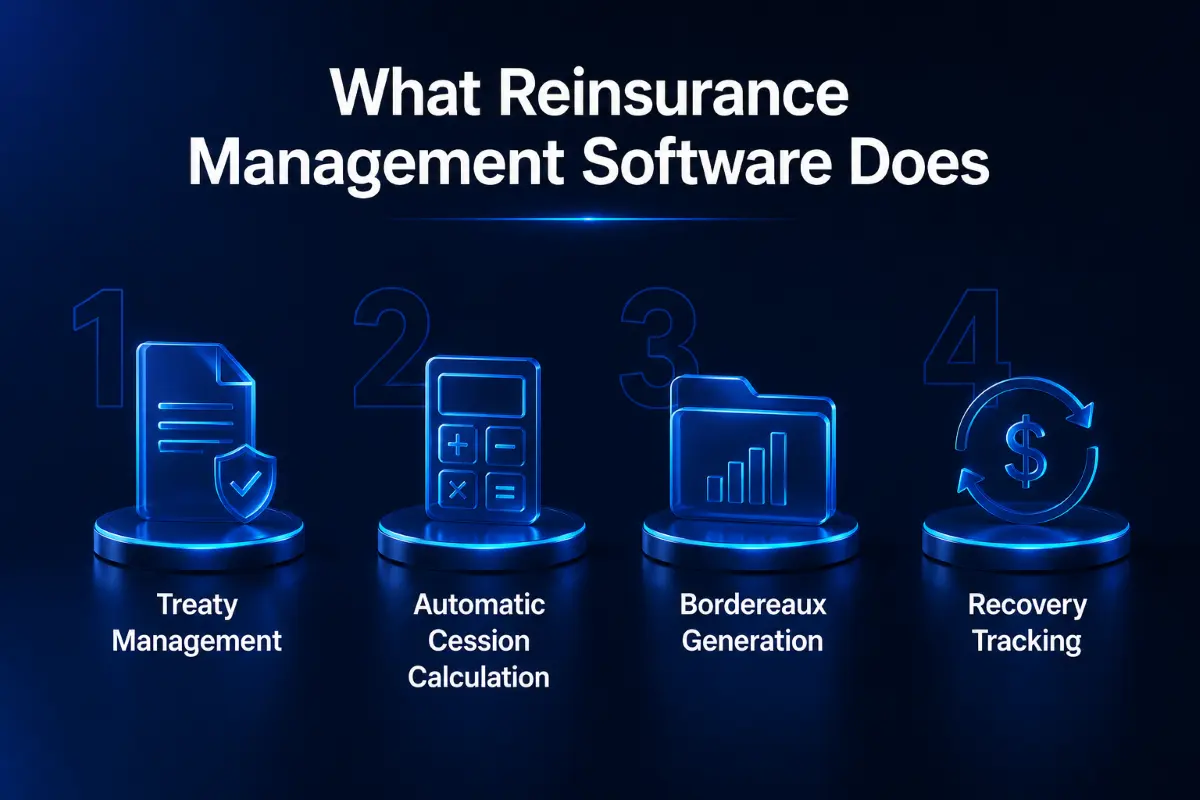
Reinsurance management software automates the operational functions involved in managing an insurer's reinsurance programme. At the core, this means four things:
-
Treaty Management
Capturing the terms of each reinsurance treaty — proportional quota share, surplus, or non-proportional excess of loss — and applying them automatically to the insurer's policy and claims data. Without automation, treaty terms live in spreadsheets or documents and are applied manually, introducing calculation error and version control risk.
-
Automatic Cession Calculation
When a policy is issued, the system calculates the reinsurer's share automatically based on the applicable treaty and records the cession in the reinsurance ledger. In a native reinsurance platform, this happens in real time at the point of policy issuance — not at month-end when someone runs the calculation manually.
-
Bordereaux Generation
Bordereaux are the periodic data submissions to reinsurers summarising ceded premium and claims. Reinsurance management software generates bordereaux automatically from the platform's policy and claims data, in formats configurable to each reinsurer's requirements. Manual bordereaux production is one of the most error-prone and time-consuming tasks in legacy reinsurance operations.
-
Recovery Tracking
When a claim is processed, the reinsurer's share is calculated automatically and tracked through to receipt. Recovery amounts are recorded in the reinsurance ledger and monitored in real time, eliminating the manual recovery register that most legacy reinsurance teams maintain separately from the claims system.
The Core Question: Native Module or Standalone System?
Reinsurance management software comes in two forms, and the distinction matters significantly for insurers evaluating their technology architecture.
A standalone reinsurance system is a specialist platform dedicated entirely to reinsurance administration. It connects to the insurer's core policy and claims systems via integration, pulling the data it needs to calculate cessions and produce bordereaux. Standalone systems are appropriate for insurers with complex reinsurance programmes — large treaty portfolios, complex non-proportional structures, multi-entity multinational arrangements.
A native reinsurance module is reinsurance capability built into the core policy administration platform. Policy issuance, claims processing, premium accounting, and reinsurance administration all operate within the same system, sharing the same data in real time. There is no integration to maintain, no data bridging, and no reconciliation gap between the core system and the reinsurance ledger.
For the majority of insurers globally, a native reinsurance module is the appropriate architecture. The reinsurance programmes of most insurers — quota share treaties, standard excess of loss structures, life and health cession arrangements — are well within the capability of a well-designed native module.
What a Native Reinsurance Module Must Do
Not all native reinsurance modules are equal. Insurers evaluating core platforms should assess reinsurance capability against these specific requirements:
- Proportional and non-proportional treaty support — quota share, surplus, and excess of loss structures, all configurable within the platform.
- Real-time cession calculation — cession calculated at the point of policy issuance, not in a batch process.
- Direct data flow from Policy and Claims — no extraction, no manual bridging, no reconciliation gap.
- Automated bordereaux generation — configurable output formats, drawn directly from platform data.
- Recovery tracking integrated with Claims — reinsurer's share tracked from claim processing through to receipt.
- Audit trail — complete, timestamped record of all reinsurance transactions for regulatory examination.
How CLAPi© Delivers Native Reinsurance Capability
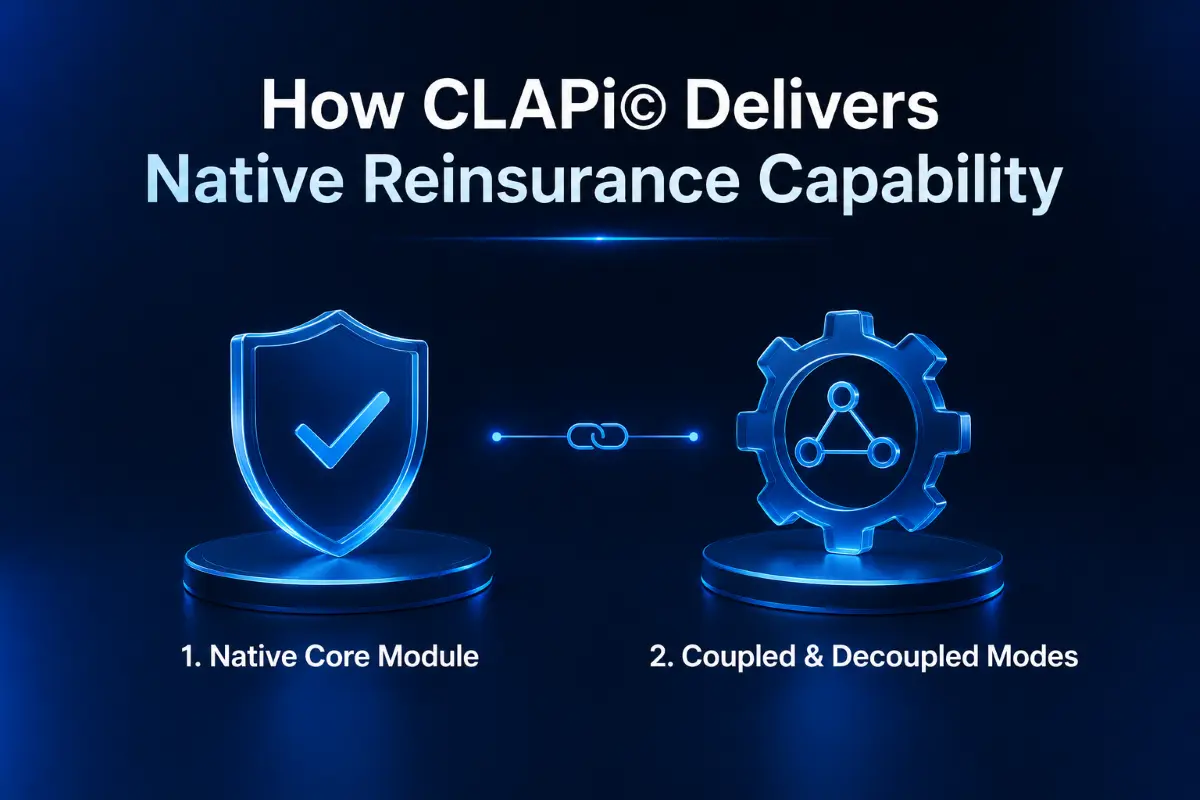
CLAPi©'s Reinsurance is a native core module — not an add-on, not a bolt-on, not a third-party integration. It shares the same data layer as Policy Administration, Policy Accounting, and Claims Management / TPA, meaning every reinsurance record has a direct, traceable link to the underlying policy and claims data.
CLAPi© is also designed to operate in both coupled and decoupled modes — meaning insurers can run it as a fully standalone all-in-one system, or integrate it with specialist external reinsurance systems through its API layer for programmes that require additional complexity. This flexibility means the architecture grows with the insurer's reinsurance programme without requiring a platform change.
FAQs
Reinsurance management software handles the administration of an insurer's reinsurance programme — including treaty configuration, cession calculation, bordereaux generation, recovery tracking, and reinsurer accounting. It can be a native module within an insurance core platform (as in CLAPi©) or a standalone specialist system for complex programmes.
No. Most insurers with standard proportional and excess of loss reinsurance programmes are fully served by a native reinsurance module within their core platform. Standalone specialist systems are warranted only for insurers with complex non-proportional structures, large multi-treaty portfolios requiring specialist analytics, or multinational group reinsurance accounting requirements.
A native reinsurance module is built into the core platform and shares the same data layer as Policy Administration, Policy Accounting, and Claims Management. A bolt-on system connects to the core platform via integration, requiring data extraction, reconciliation, and bridging. The practical difference is data integrity, processing speed, and operational overhead — native modules eliminate the manual reconciliation that bolt-on systems require.
Yes. CLAPi© operates in both coupled and decoupled modes. For insurers whose reinsurance programme complexity warrants a specialist standalone system, CLAPi© provides the operational reinsurance data feed through its API layer — handling cession, bordereaux, and recovery operationally while the specialist system handles complex analytics or multinational consolidation.
See CLAPi©'s Reinsurance Module in Action
If you want to understand how CLAPi©'s native Reinsurance module integrates with Policy Administration, Accounting, and Claims — and assess whether it covers your programme's specific requirements — our team can walk you through a live demonstration.
Request a demo at enoviq.com/platform/group-insurance